
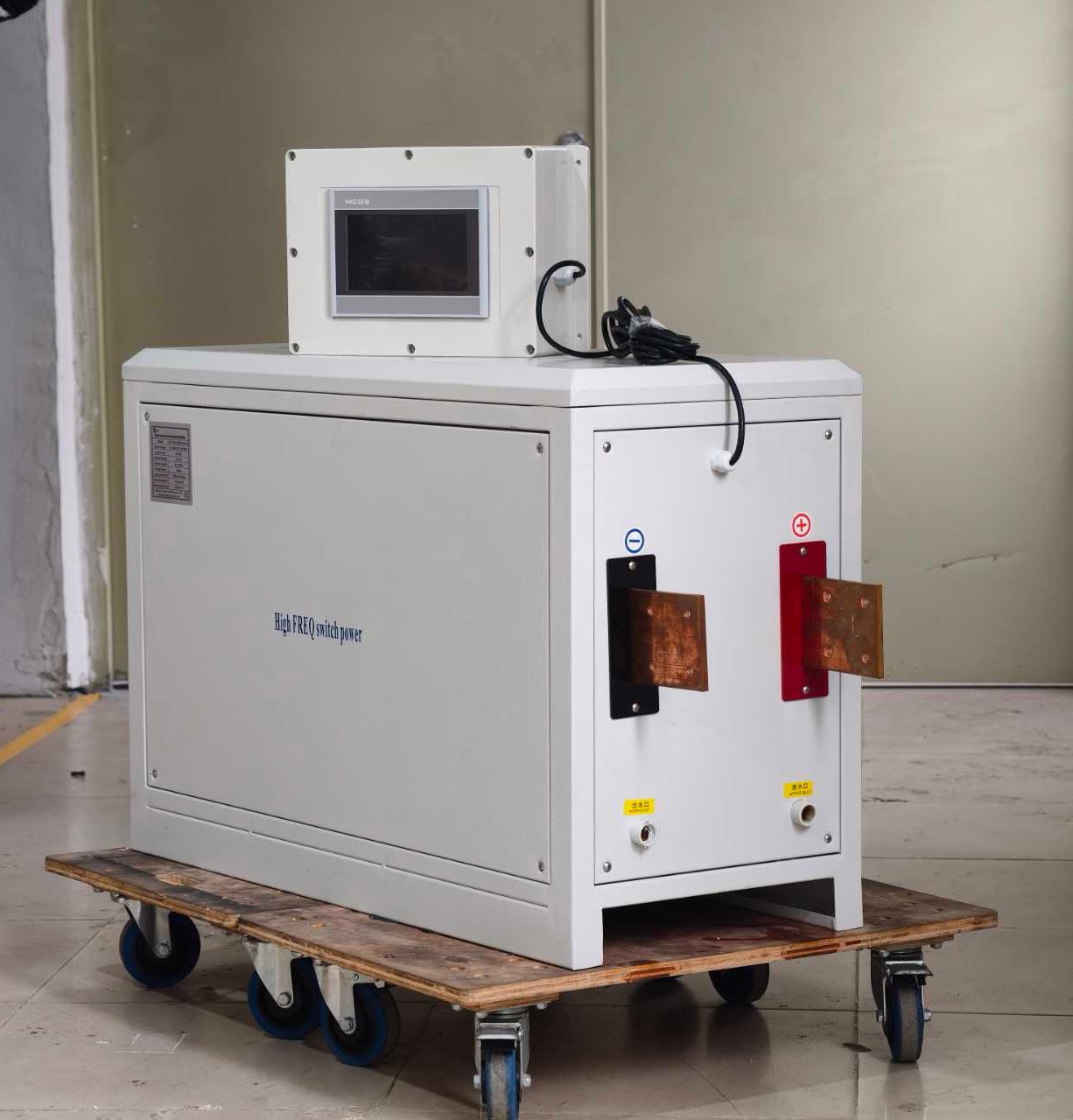
Ordinary unidirectional DC rectifiers are only suitable for zinc plating and nickel plating. Chromium plating has inherent severe process flaws; using straight DC alone causes a host of defects including uneven coating, burrs, pitting, incomplete plating in deep bores, cracks, and poor adhesion. Polarity reversal (forward plating paired with brief reverse anodic electrolysis) is a well-established improvement solution in hard chrome plating, and IGBT electronic reversing power supplies are dedicated equipment engineered for this process.
Polarity reversal achieves surface leveling, substrate activation and stress reduction through short-duration reverse anodic dissolution, serving as the core process to consistently manufacture high-quality hard chrome deposits.
Unique Process Pain Points of Chromium Plating (Unsolvable by Unidirectional DC)
1. Extremely low chromium deposition current efficiency and severe concentration polarization
The cathode efficiency of chromic acid plating solution stands at merely 10%–18%, generating massive hydrogen evolution. Current concentrates on protrusions and edges of workpieces (tip effect), resulting in overly thick coatings and prominent burrs. Meanwhile, deep bores, inner walls and recesses receive minimal current, yielding thin or even absent chromium deposits.
2. Microscopic surface irregularities amplify coating thickness disparities infinitely
Metal deposits build up faster on raised surfaces and much slower on depressions. The thickness gap widens as plating proceeds, which may render molds and hydraulic rods completely unusable.
3. Oxide films trigger peeling and weak coating adhesion
Steel workpieces readily form passive oxide films upon immersion in the plating bath, which cannot be eliminated by unidirectional current, leading to easy delamination of chromium coatings.
4. High coating internal stress and abundant cracks
Straight DC chromium plating produces extremely high internal stress within deposits. Thick chromium layers are riddled with microcracks, impairing wear resistance and anti-corrosion performance.
How Polarity Reversal (Forward Deposition + Reverse Electrolysis) Eliminates the Above Defects
1. Reverse anodic leveling removes burrs and balances coating thickness
- Forward cycle (cathodic state): The workpiece carries negative charge for normal chromium metal deposition.
- Brief reverse cycle (anodic state): The workpiece instantly switches to positive potential. Coatings on protrusions, tips and edges dissolve preferentially (higher current density on metal ridges accelerates dissolution).
- Every cycle trims down raised surfaces. Continuous plating delivers uniform overall coating thickness and drastically narrows thickness discrepancies on deep bore inner walls.
2. Reverse electrolysis dissolves passive films to boost coating adhesion
Reverse anodic treatment slightly etches the substrate surface and strips passive oxide scale on steel. This allows chromium deposits to tightly bond with the base metal and eliminates peeling or chromium flaking. A standalone reverse activation cycle can be programmed after workpiece immersion, an indispensable step for high-spec hard chrome plating.
3. Reduces coating internal stress, minimizes cracks and elevates hardness
Alternating deposition via periodic reversal breaks down massive internal stress accumulated during continuous unidirectional plating. The resulting chromium layer is dense with fewer microcracks, featuring higher hardness and substantially extended service life against wear.
4. Improves throwing power on deep blind holes and complex cavities
Under unidirectional DC, hydrogen accumulates inside bores and inhibits current penetration. Reverse electrolysis dissolves excessively thick chromium at bore openings, enabling forward current to easily reach inner cavities in subsequent cycles and resolving incomplete plating and thin inner-wall coatings on deep holes.
5. Removes surface contaminants to cut pitting and pinhole defects
Reverse electrolysis dissolves suspended impurities adsorbed on workpieces and hydrogen bubble adhesion layers, significantly lowering reject rates caused by surface pitting and pinholes.
Practical Process Cycle Logic (Industry-Standard Routine)
Forward chromium plating (40–90 seconds at standard deposition current) → brief reverse leveling (2–8 seconds, current 1.2–1.8 times the forward value), operating in fully automatic repeated cycles. The reverse phase lasts a very short time and will not over-erode valid coatings; it only delivers micro-leveling without compromising production throughput.
Why Vintage Mechanical Reversing Systems Are Replaced by IGBT Electronic Polarity-Reversing Rectifiers
- Contactor-based mechanical reversal generates intense electric arcs under high current, ablating contacts and requiring frequent part replacement.
- Mechanical switches execute polarity shifts slowly with severe current surges, prone to triggering coating peeling.
- IGBT contactless technology delivers millisecond-grade polarity switching with fully adjustable precise parameters; forward current, reverse current and respective durations can be set independently.
- Compatible with coulomb meters and PLC fully automatic production lines to stabilize batch chromium plating quality.
Chromium Plating Scenarios Requiring Polarity-Reversing Rectifiers
- Thick hard chrome plating: hydraulic rods, mill rolls, injection molds, wear-resistant construction machinery components
- Irregular workpieces, deep blind holes and complex cavity parts
- High-grade decorative chrome demanding mirror-smooth uniform surfaces free of burrs
- Reconditioning plated chromium parts, carbon steel workpieces requiring activation pre-coating
Brief Summary
Chromium plating inherently suffers from uneven deposition, passive film formation and high internal stress, and straight DC only produces substandard chromium coatings. Polarity reversal achieves surface leveling, substrate activation and stress reduction through short-duration reverse anodic dissolution, serving as the core process to consistently manufacture high-quality hard chrome deposits. For this reason, polarity-reversing IGBT rectifiers are standard equipment across the industry.